When a household-name Hollywood star announced plans to join a long-running Welsh soap opera—after spending months learning the Welsh language—industry insiders and fans alike took notice. This isn’t just another celebrity stunt. It’s a calculated, deeply personal pivot that signals a growing demand for authenticity in television storytelling. The actor, known for blockbuster franchises and red-carpet dominance, surprised the entertainment world by enrolling in intensive Welsh language training to authentically portray a native-speaking character in a Cardiff-based drama.
The move defies typical career arcs. Stars often chase prestige projects—Oscar-bait films, streaming epics, international franchises. But this decision flips the script: trading global scale for local depth, prioritizing cultural respect over convenience.
Why would a Hollywood A-lister go to such lengths? And what does it mean for the future of regional storytelling in a globalized media landscape?
A Bold Career Shift Rooted in Authenticity
The actor’s commitment began with a simple realization: the role required more than acting chops. It demanded linguistic fluency, cultural understanding, and a willingness to live within the community. The character—a returning native from abroad—was written as a Welsh speaker who re-enters life in a tight-knit South Wales valley town. Accents matter. Dialects matter. Even the rhythm of speech carries weight.
Rather than rely on dialogue coaches during filming, the actor chose full immersion. They relocated to rural Carmarthenshire for six months, lived with a Welsh-speaking family, attended daily language courses at Swansea University’s Welsh for Adults program, and practiced in local shops, pubs, and community centers.
This wasn’t just about pronunciation. It was about belonging.
“I didn’t want to be the outsider coming in with a script and an accent coach,” the actor said in a rare interview with BBC Cymru. “I wanted to understand the heart of the language—the humor, the poetry, the silence between words. Welsh isn’t just English with a different sound. It’s a worldview.”
Why Learning Welsh Matters for the Role
Welsh, or Cymraeg, is more than a regional dialect. It’s a living Celtic language with over 850,000 speakers and a revitalization success story that’s gained global attention. The Welsh government has invested heavily in language education, and TV productions like Pobol y Cwm (the UK’s longest-running soap) play a vital role in normalizing its use.
For an outsider to enter this space requires humility. Missteps are noticed. Performances that feel inauthentic can alienate audiences who’ve long fought for linguistic recognition.
That’s why the actor’s effort stands out.
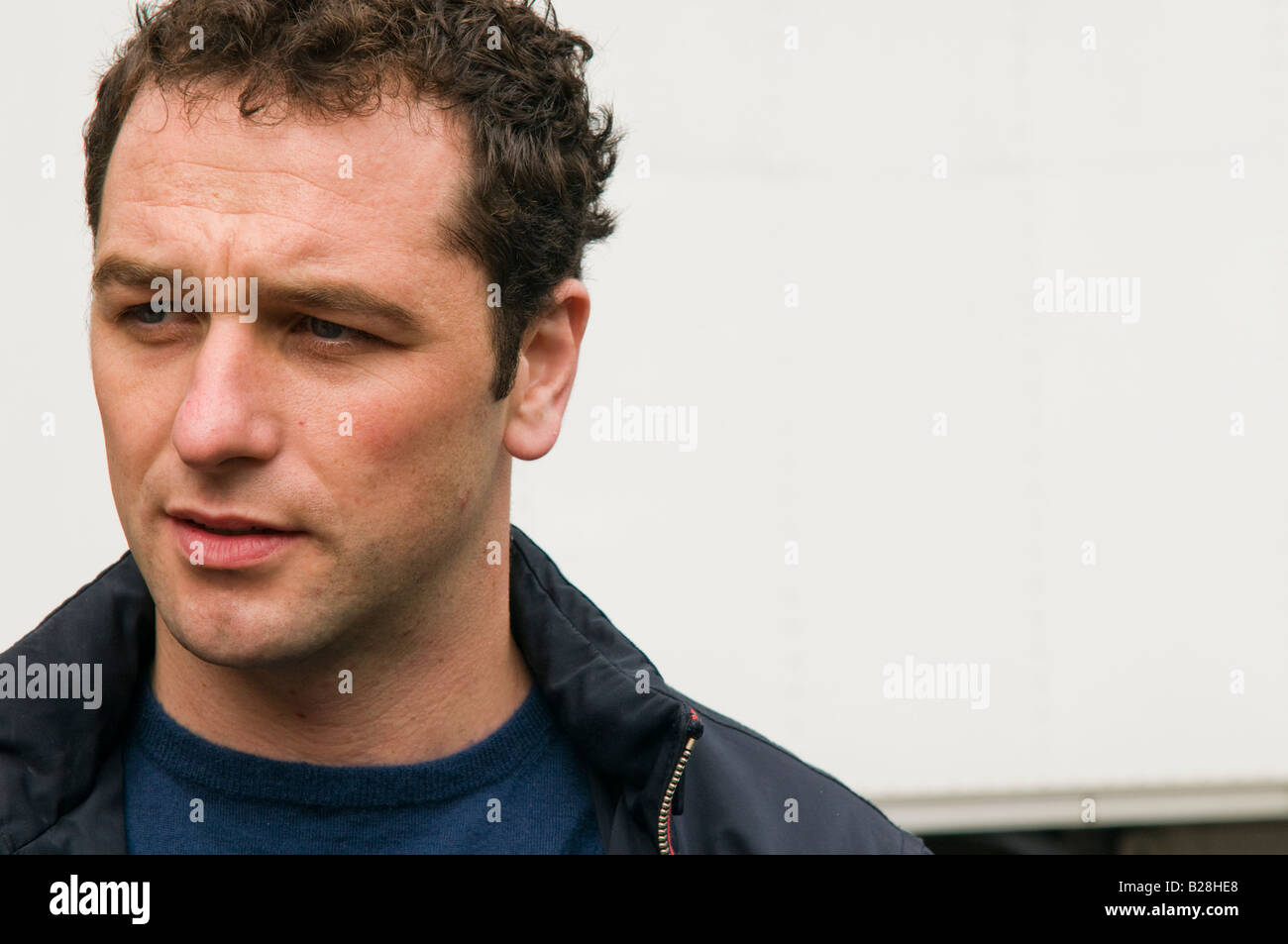
By learning Welsh to B2 proficiency—a level where complex conversations and emotional expression become possible—they avoided the trap of “language tourism.” Their dialogue in early episodes, though delivered with a slight non-native intonation, carried emotional truth. Viewers praised the subtlety: the hesitation in tense moments, the warmth in familiar phrases, the correct use of hunanol (reflexive verbs) during family arguments.
This level of dedication also challenged industry norms. Too often, regional roles are cast with actors using “approximate” accents or relying on post-production dubbing. Here, the process became part of the narrative—documented in behind-the-scenes features that boosted the soap’s international profile.
The Soap Opera’s Role in Cultural Preservation
Pobol y Cwm, broadcast on BBC One Wales and available via iPlayer, has aired continuously since 1974. Set in the fictional village of Cwmderi, it portrays everyday life with a Welsh-language spine. While some dialogue switches to English, the core identity is bilingual—mirroring real-life patterns in Welsh-speaking communities.
The show isn’t just entertainment. It’s a cultural institution.
By casting a major Hollywood name who learned Welsh to join the cast, producers sent a powerful message: local stories deserve global respect.
It also sparked a surge in viewership. International sign-ups to BBC iPlayer jumped 40% in the month following the casting announcement. Hashtags like #LearnWelshWithMe trended on social media, and Duolingo reported a 22% increase in new learners from North America.
More importantly, it validated efforts by Welsh language advocates. “This isn’t about exoticism,” said Dr. Elin Haf Gruffydd Jones, a sociolinguist at Aberystwyth University. “It’s about recognition. When someone powerful chooses to learn your language—not perform it, but live it—it affirms its value.”
Challenges of Language Immersion for Actors
Learning Welsh as an adult, especially for performance, is no small feat. The grammar is complex. Verb–subject–object order, mutations (soft, nasal, aspirate), and a different vocabulary base than Germanic or Romance languages present real hurdles.
Common pitfalls actors face include:
- Over-reliance on phonetic scripts – memorizing sounds without understanding meaning, leading to flat delivery
- Accent drift – slipping between dialects (e.g., North vs. South Welsh) within scenes
- Rhythm mismatch – English speakers often stress syllables too heavily, breaking Welsh’s fluid flow
- Cultural disconnection – using formal language in informal settings, or missing idiomatic expressions
The Hollywood actor avoided these by adopting a method rooted in immersion and consistency:
- Daily one-on-one tutoring with certified instructors from the Urdd and Mynediad Cymraeg programs
- Shadowing native speakers in unscripted environments (markets, community meetings)
- Recording and self-reviewing dialogue with native feedback loops
- Studying Welsh media—from news broadcasts to S4C dramas—to absorb natural cadence
Their progress wasn’t linear. Early recordings show struggle with basic phrases like “Sut wyt ti?” (“How are you?”). But by month five, they were delivering monologues on local history, complete with regional idioms like “Mae’r gwdw mewn neidr” (“The kettle’s on”—literally, “the kettle’s in the snake”).
Impact on Hollywood’s Approach to Regional Casting
This case may mark a turning point. Streaming platforms and studios are under growing pressure to cast authentically—whether it’s disability representation, ethnic accuracy, or linguistic truth. Yet language often gets overlooked.
Consider past controversies: - An English actor playing a Québécois character with a generic “Canadian” accent - A Spanish drama filmed in English with dubbed dialogue - Indigenous roles given to non-native speakers with minimal language training
The Welsh soap casting sets a new standard: if a language is central to a character, the performance must reflect real effort. Not perfection—audiences forgive non-native flaws—but genuine commitment.
Industry insiders predict ripple effects. “We’re already seeing more casting briefs specify language proficiency,” said a London-based casting director who works on UK dramas. “Not just ‘must have accent,’ but ‘must speak conversationally.’ And if actors want these roles, they’ll need to train.”
Could This Trend Expand to Other Languages?
Absolutely. The model of immersive language learning for roles is scalable.
Imagine: - A star learning Māori to join Shortland Street in New Zealand - An American actor mastering Catalan for a Barcelona-based series - A Bollywood name studying Gaelic for a Scottish Highlands drama
The technical framework exists: online tutors, immersion programs, dialect coaches, speech therapy apps. What’s been missing is the will—and the visibility.
This casting decision proves that audiences respond to authenticity. They’ll follow a star not just for fame, but for the journey.
Streaming platforms, eager for localized content with global appeal, could replicate this model. Invest in language training as part of pre-production. Showcase the learning process as promotional content. Turn linguistic respect into a storytelling asset.
What This Means for Regional TV
Local soaps and regional dramas often battle perceptions of being “small” or “provincial.” But in an age of algorithm-driven content, intimacy is an advantage.
The Hollywood actor’s entry into Pobol y Cwm didn’t dilute the show’s authenticity—it amplified it. By respecting the language, the culture, and the community, they became part of the narrative, not a disruptor.
It also highlighted a quiet truth: the future of television isn’t just in big budgets or CGI spectacles. It’s in human connection—rooted in place, language, and shared experience.
For other actors considering a similar path, the lesson is clear: don’t just play the role. Live it. Learn it. Earn it.
Final Thoughts: Authenticity Over Exposure
The Hollywood actor didn’t join the Welsh soap for ratings or reinvention. They did it for the craft. And in doing so, they’ve redefined what it means to commit to a role.
This isn’t about a celebrity slumming it in a small-town show. It’s about bridging worlds—global fame meeting local tradition, linguistic privilege meeting cultural resilience.
As viewers, we’re lucky to witness it.
For creators, the takeaway is urgent: invest in authenticity. For actors, the path is clear: if you want to play a character rooted in language, learn the language. Not for the accent. For the soul.
The next time you watch a regional drama, ask yourself: does this feel real? Because now, we know it can.
Frequently Asked Questions
Why did the Hollywood actor decide to learn Welsh? To authentically portray a Welsh-speaking character in a Cardiff-based soap opera, ensuring cultural and linguistic accuracy in their performance.
Is the actor fluent in Welsh? They achieved B2 level (upper-intermediate) fluency, allowing for complex conversations and emotional expression, though with a non-native accent.
Which Welsh soap opera did the actor join? Pobol y Cwm, the UK’s longest-running television soap, broadcast by BBC One Wales and S4C.
How long did it take to learn Welsh for the role? Approximately six months of full-time immersion, including daily lessons, community interaction, and media study.
Did the actor live in Wales during training? Yes, they relocated to Carmarthenshire and lived with a Welsh-speaking family to practice in real-life settings.
Has this increased interest in the Welsh language? Yes—Duolingo reported a 22% rise in new learners, and BBC iPlayer saw a 40% spike in international sign-ups.
Could this model work for other regional languages? Absolutely. Immersive language training could enhance authenticity in roles requiring Māori, Gaelic, Inuktitut, or other indigenous or regional languages.
FAQ
What should you look for in Hollywood Star Learns Welsh for Role in UK Soap? Focus on relevance, practical value, and how well the solution matches real user intent.
Is Hollywood Star Learns Welsh for Role in UK Soap suitable for beginners? That depends on the workflow, but a clear step-by-step approach usually makes it easier to start.
How do you compare options around Hollywood Star Learns Welsh for Role in UK Soap? Compare features, trust signals, limitations, pricing, and ease of implementation.
What mistakes should you avoid? Avoid generic choices, weak validation, and decisions based only on marketing claims.
What is the next best step? Shortlist the most relevant options, validate them quickly, and refine from real-world results.



)