Safety doesn’t need hours. It needs attention.
On busy job sites, long safety meetings eat into productivity. But skipping them risks lives. That’s why short toolbox talk topics are essential—they deliver high-impact safety messages in 5 to 10 minutes, keeping crews informed without slowing work.
These micro-sessions focus on one hazard, one behavior, or one procedure at a time. When done right, they’re not just routine—they’re reminders that shape culture.
Let’s break down how to choose, deliver, and sustain effective short toolbox talks.
Why Short Toolbox Talks Work Where Long Meetings Fail
Length isn’t leadership. Engagement is.
Long safety meetings often lose focus. Workers zone out. Supervisors rush through slides. Critical points get buried.
Short toolbox talks avoid this by design:
- Focused scope: One topic only—like ladder safety or glove use.
- Real-time relevance: Delivered at the worksite, just before the task.
- Two-way dialogue: Crews speak up, share near-misses, ask questions.
- No slides, no fluff: Just clear, conversational safety.
A roofing crew, for example, might gather for 7 minutes before starting. The supervisor holds up a damaged harness strap. “Would you wear this?” That single question sparks a discussion on inspection standards—and drives the point home better than any 30-minute lecture.
The key isn’t duration. It’s immediacy.
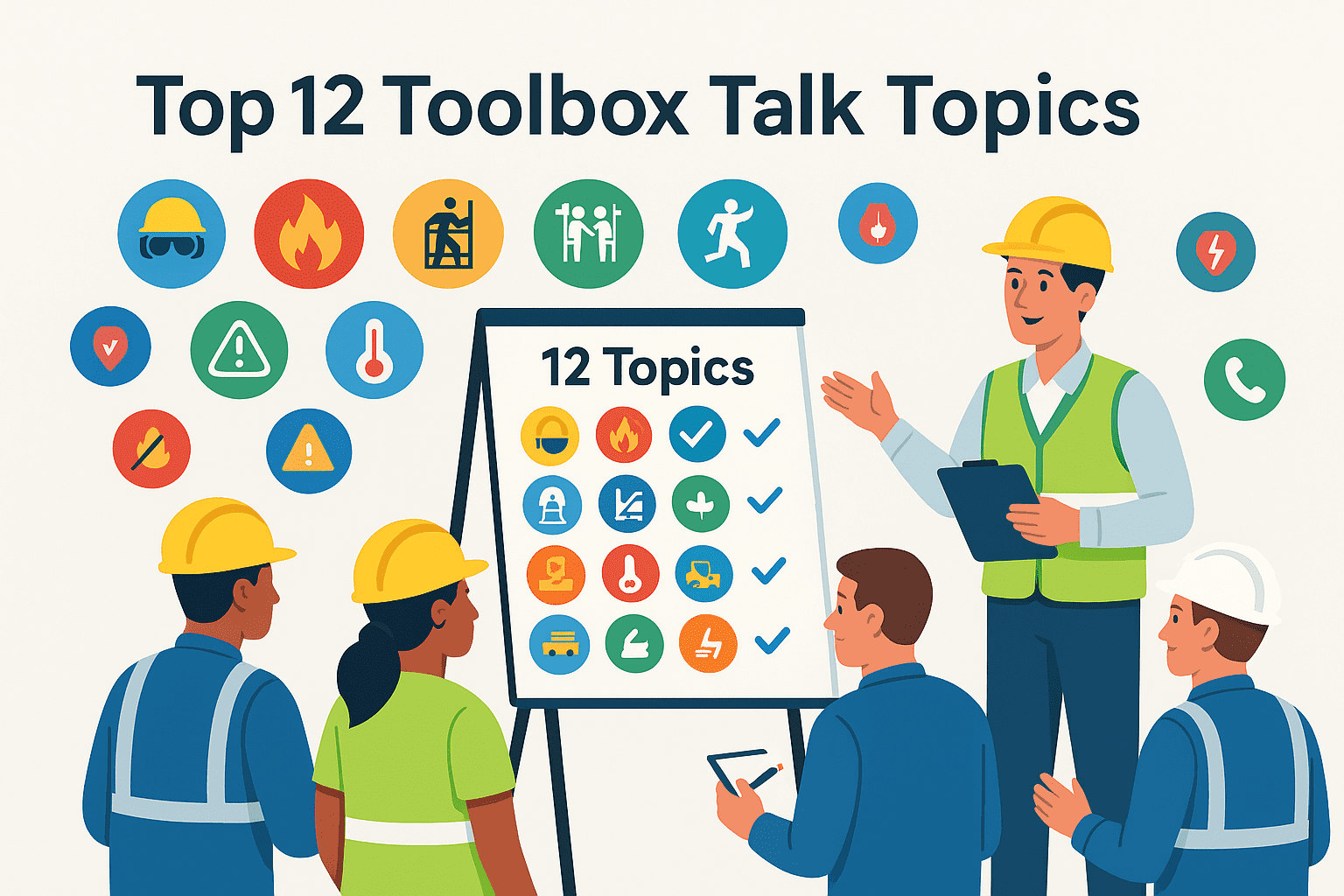
Top 10 Short Toolbox Talk Topics (With Examples)
Not all topics fit a 10-minute format. The best ones are specific, actionable, and tied to current work.
Here are 10 proven short toolbox talk topics—each designed to start conversation, not monologue:
#### 1. Proper Use of Fall Protection Example: Show a harness with a frayed D-ring. Ask: “Would this save your life?” Discuss inspection steps and anchor points.
#### 2. Hand Safety Around Moving Equipment Example: Review a recent near-miss where a worker reached near a conveyor. Emphasize lockout and guarding.
#### 3. Eye Protection for Grinding Tasks Example: Show photos of metal shards embedded in safety goggles. Reinforce side-shield use and seal fit.
#### 4. Slip, Trip, and Fall Hazards on Wet Surfaces Example: Point to a muddy walkway. Ask: “What would happen if someone slipped here?” Discuss drainage, signage, and housekeeping.
#### 5. Correct Lifting Techniques Example: Demonstrate improper lifting with a tool bag. Then show the right way—bend knees, keep back straight.
#### 6. Hearing Protection in High-Noise Zones Example: Play a 10-second audio clip of jackhammer noise. Ask: “Are your ears protected today?” Check fit and usage.

#### 7. Hot Work Permit Awareness Example: Walk through a real permit. Highlight fire watch requirements and fuel storage rules.
#### 8. PPE Inspection Before Use Example: Pass around a cracked hard hat. Discuss crack tolerance, expiry dates, and impact history.
#### 9. Weather-Related Hazards (Heat or Cold) Example: On a hot day, ask: “What are your hydration habits?” Share early signs of heat stress.
#### 10. Tool Handling: Power vs. Hand Tools Example: Compare a loose wrench to a worn drill bit. Stress secure grips, correct sizing, and storage.
Each topic stands alone. Each can be delivered without prep beyond 2 minutes.
How to Structure a 5-Minute Toolbox Talk
Great short talks follow a simple pattern:
- Hook (30 seconds): Start with a question, prop, or real incident.
- “Last week, someone tripped over this cable. What could we do better?”
- Explain (2 minutes): Clarify the hazard and correct behavior.
- “Cables across walkways are trip hazards. We’ll use cable ramps and tape.”
- Engage (2 minutes): Ask for input.
- “Have you seen this elsewhere? What’s worked for your crew?”
- Close (30 seconds): Confirm action.
- “Today, we’ll secure all cables before setup. Report any issues.”
Write none of this down. Speak it. Show it.
Common Mistakes That Kill Impact
Even short talks can fail. Avoid these traps:
- Repeating the same topic monthly
- Workers tune out. Rotate topics based on seasonal risks and recent incidents.
- Reading from a script
- Feels robotic. Use bullet points, not paragraphs.
- Ignoring crew input
- The goal isn’t compliance—it’s conversation. If no one talks, rethink your approach.
- Holding talks in poor conditions
- Rain, wind, or high noise? Reschedule or move. Visibility and hearing matter.
- No follow-up
- If you talk about ladder safety but never check ladder condition, crews learn you don’t mean it.
One electrical contractor improved compliance by 40% just by asking, “Who here has seen a damaged cord this week?” before discussing inspections. The question made it real.
Best Practices for Sustained Success
Short talks only work when consistent and credible.
Adopt these habits:
- Schedule daily, not weekly
- Daily 5-minute talks beat weekly 30-minute lectures. Consistency builds awareness.
- Rotate leaders
- Let experienced workers lead occasionally. Fresh voices increase engagement.
- Tie to current tasks
- Never talk about confined space entry if no one’s entering one today.
- Keep records simple
- A clipboard with date, topic, attendees, and supervisor signature is enough. Don’t over-document.
- Review near-misses immediately
- A worker almost trips? Stop. Talk. Fix. That’s when the lesson sticks.
On one pipeline project, supervisors began using “5-minute fix” talks—addressing small hazards on the spot. Result? 22% drop in recordables in three months.

5 Tools to Streamline Short Toolbox Talks
While paper logs still work, digital tools boost efficiency and tracking.
Here are five practical platforms used across construction and maintenance:
| Tool | Key Features | Best For |
|---|---|---|
| SafetyCulture (iAuditor) | Pre-built templates, photo capture, real-time reports | Teams needing audit-grade records |
| SiteDocs | Offline access, form builder, PPE tracking | Industrial and remote sites |
| GoCanvas | Custom forms, e-signatures, cloud sync | Small crews wanting simplicity |
| Procore (Toolbox Talk Module) | Integrated with project management, automated reminders | Large contractors using Procore |
| SmartSAFE | AI-powered insights, multilingual support, mobile-first | Multilingual or high-turnover crews |
Choose based on need. A 10-person crew might prefer paper. A national contractor needs digital traceability.
None replace human delivery—but all help track what’s been covered.
Making It Stick: Culture Over Compliance
Toolbox talks aren’t check-the-box exercises.
The best ones change behavior.
On a wind farm project, a supervisor started each talk by asking, “What’s one thing you’re worried about today?” Workers began speaking up about fatigue, unclear signals, even personal stress. Safety didn’t just improve—it became shared.
Short topics work because they’re manageable. But their power comes from consistency, respect, and relevance.
When a worker says, “Hey, your gloves are torn,” after a talk on hand protection—that’s success. Not because you talked, but because they listened enough to care.
Final Thoughts: Talk Often, Talk Smart
Short toolbox talk topics aren’t shortcuts. They’re precision tools.
Use them to spotlight risks, reinforce habits, and open dialogue. Focus on one thing. Keep it real. Invite input.
A great talk doesn’t need flash. It needs clarity, courage, and connection.
Start tomorrow: pick one hazard, gather your crew, and ask one question.
That’s how safety grows—one minute at a time.
FAQ
What is a short toolbox talk? A brief safety discussion (5–10 minutes) focused on a single hazard or safe work practice, typically held at the job site.
How often should toolbox talks be held? Ideally daily, especially before high-risk tasks. Weekly talks are common, but daily reinforces awareness.
Who should lead a toolbox talk? Supervisors usually lead, but experienced crew members can also facilitate to promote engagement.
Do toolbox talks need to be documented? Yes. Basic records—date, topic, attendees, and supervisor—support compliance and tracking.
Can toolbox talks reduce accidents? Yes. Regular, relevant talks improve hazard recognition and reinforce safe behaviors, reducing incident rates.
Should toolbox talks include all workers? Yes. Include everyone on site, even visitors or contractors, to maintain a unified safety culture.
What’s the difference between a safety meeting and a toolbox talk? Safety meetings are longer and broader. Toolbox talks are short, specific, and task-focused.
FAQ
What should you look for in Short Toolbox Talk Topics for Safer Work Sites? Focus on relevance, practical value, and how well the solution matches real user intent.
Is Short Toolbox Talk Topics for Safer Work Sites suitable for beginners? That depends on the workflow, but a clear step-by-step approach usually makes it easier to start.
How do you compare options around Short Toolbox Talk Topics for Safer Work Sites? Compare features, trust signals, limitations, pricing, and ease of implementation.
What mistakes should you avoid? Avoid generic choices, weak validation, and decisions based only on marketing claims.
What is the next best step? Shortlist the most relevant options, validate them quickly, and refine from real-world results.



)